Farming System / 01

Contract
Farming.

A structured production partnership connecting farmers, land, cultivation systems, quality control and commercial buyers. The objective is simple: produce the right crop, to the required specification, with a defined route to market.

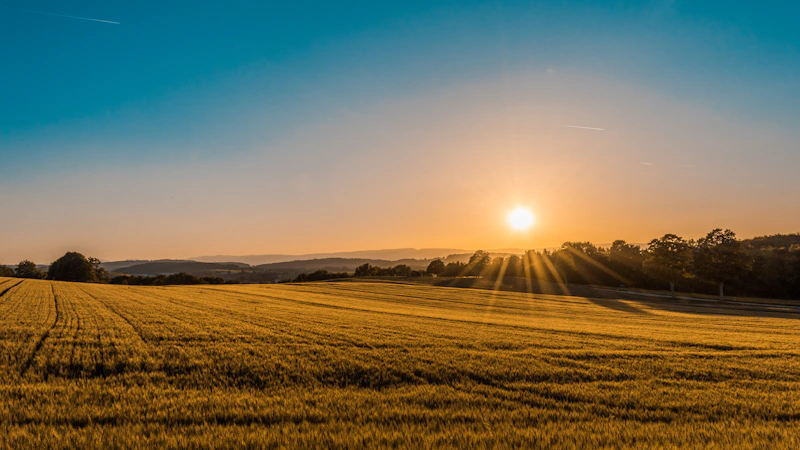
Agricultural field prepared for contract farming
Farmer + Company + Market
A production system
built around a contract.
01 Farm to market
The model

Not just
a buyer.
A system.

Contract farming is a planned production arrangement in which a farmer and a contracting company agree in advance on the crop or production system, cultivation requirements, quality standards, quantity or acreage, delivery arrangements and the commercial terms.

VL Bio Farms uses this model to bring together farmers, companies, technical support, quality testing, post-harvest operations and market access. Depending on the project, the company may provide seed, technical support, testing, quality certification, packaging, transportation, market linkage or a combination of these.

The exact allocation of cost, responsibility, risk and deliverables is defined before cultivation starts and is recorded in the project agreement and its crop-specific schedule.

Three engagement structures

One model does
not fit every farm.

We can structure the relationship according to the level of technical involvement, farmer investment, company involvement and quality-control requirements.

Model 01

Seed +
Buy-Back

A farmer-led production arrangement where VL Bio Farms supplies the agreed seed and establishes the crop specification and procurement pathway.

Responsibility structure

Company: agreed seed, crop specifications, procurement coordination and produce testing at intake.

Farmer: cultivation, field management, harvesting and compliance with the agreed production protocol.

75% / 25%
Indicative responsibility allocation for this model; final allocation is crop- and agreement-specific.
Quality and contamination requirements are established before planting. Produce that does not meet the agreed specification is handled according to the quality and rejection provisions of the contract.
Model 02

Supported
Contract Farming

A stronger technical partnership for farmers who want year-round crop guidance, seed support and a more closely managed production programme.

Responsibility structure

Company: seed, technical guidance, crop monitoring, quality planning and year-round consulting support.

Farmer: land operations, day-to-day cultivation and agreed on-farm responsibilities.

75% / 25%
Indicative company / farmer responsibility allocation, subject to the project agreement.
Year-round consulting can be structured as a defined service component with an agreed fee, scope, visit frequency and support schedule.
Model 03

Complete
Contract Support

A comprehensive post-production and market-support structure where the farmer provides land and cultivation investment while VL Bio Farms manages defined supply-chain functions.

Responsibility structure

Farmer: provides suitable land and the agreed cultivation investment and carries the agreed on-farm production responsibilities.

Company: seed, produce testing, defined quality certification/coordination, packaging and transportation under the agreed contract.

End-to-market
Supply-chain responsibilities are clearly assigned before the project begins.
This structure is useful where the farmer can operate the land but needs a stronger company-led pathway for inputs, quality assurance and movement of the harvested produce.
Who does what

Clear roles.
Clear output.

A successful contract farming project works when every operational responsibility is known before cultivation begins. The following matrix is the basic framework; the final contract changes according to crop, site, production system and commercial requirement.

Activity Farmer VL Bio Farms / Company Defined in contract
Land & site Land availability and on-site operations Site suitability assessment where included Yes
Seed / planting material Receive, preserve and use as specified Supply under applicable model Yes
Cultivation Day-to-day field or farm operations Protocol and technical support where included Yes
Consulting Participate and implement recommendations Periodic / year-round consulting under supported model Yes
Testing Provide representative produce and maintain agreed practices Testing / quality verification under applicable model Yes
Quality certification Maintain required production standards Coordinate certification where included Yes
Packaging As assigned under the project Company responsibility under complete support model Yes
Transportation As assigned under the project Company responsibility under complete support model Yes
Quality is part of farming

The crop is
not finished
at harvest.

In commercial contract farming, quality begins in the field and continues through harvest, testing, handling, packaging and transportation. This is especially important for medicinal, aromatic, food, aquaculture and export-oriented production.

Field protocol

Seed source, planting density, fertilisation, irrigation, crop protection, harvesting and handling requirements can be defined before planting.

Contamination control

Depending on the commodity, testing may cover contamination, residues, microbial parameters, physical quality or other buyer-defined requirements. The exact tests are selected for the crop and end use.

Acceptance criteria

The agreement defines the quality specification, sampling process, testing procedure, acceptance or rejection criteria and the commercial treatment of produce that does not meet the agreed standard.

Beyond conventional fields

One contract model.
Multiple production systems.

Contract farming is not restricted to conventional open-field crops. The same principle of clearly allocating inputs, technical responsibility, quality control and market linkage can be adapted to different agricultural production environments.

Open land farming
01

Open Land

Conventional agricultural land for medicinal, aromatic, food, fibre or other contracted crops.

Pond farming
02

Pond Farming

Aquatic production where the contract defines stocking, production practices, quality, testing, harvest and market arrangements.

Aquaponics production
03

Aquaponics

Integrated fish and crop systems where technical management, input responsibility and product quality can be assigned across the contract.

Floating farm concept
04

Floating Farms

Production concepts for water-affected areas where floating or water-adapted systems can create a usable production platform.

Adaptive agriculture

When the land
doesn't behave
like a normal farm.

Flood-prone, water-affected and seasonally inundated land can require a different production architecture. Instead of forcing a conventional field model onto unsuitable land, the project can evaluate pond-based, floating, aquaponic or other water-compatible production systems.

Punjab

Projects in flood- or water-affected areas can be evaluated according to local hydrology, land use, drainage, seasonal water behaviour and the proposed production system.

Uttarakhand

Terrain, water movement, access, climate and site-specific agricultural conditions are considered before selecting an appropriate contract production model.

Other Regions

The model can be assessed in other states where conventional cultivation is constrained by flooding, waterlogging, land availability or seasonal production conditions.

Site First

No system is selected from a brochure alone. The site, water, crop, investment, operating capability and market are evaluated together.

Project workflow

From conversation
to harvest.

01

Brief

Understand land, crop, buyer and production objective.

02

Assess

Evaluate site, water, climate, infrastructure and operating capacity.

03

Design

Select crop, system, inputs, quality requirements and responsibility split.

04

Contract

Document scope, cost, quality, delivery and commercial terms.

05

Cultivate

Execute the agreed production protocol with monitoring and support.

06

Test & Move

Test, grade, package and move accepted produce through the agreed channel.

Project documentation

Everything important
is agreed before planting.

Crop & acreage

Crop, variety, production area, season and expected production window.

Inputs

Seed, planting material, fertiliser, equipment or other inputs and who supplies them.

Quality

Specification, sampling, testing, contamination parameters, acceptance and handling of non-conforming produce.

Harvest & delivery

Harvest timing, delivery point, transport responsibility, packaging and logistics.

Commercial terms

Price or pricing mechanism, payment schedule, procurement conditions and applicable deductions or costs.

Responsibilities

A clear allocation of farmer and company responsibilities for every stage of the project.

Build a production partnership

Have land?
Have a market?
Let's build it.

Whether the requirement is open-field cultivation, medicinal and aromatic crops, pond farming, aquaponics or a floating production system, the first step is a site and commercial assessment.